
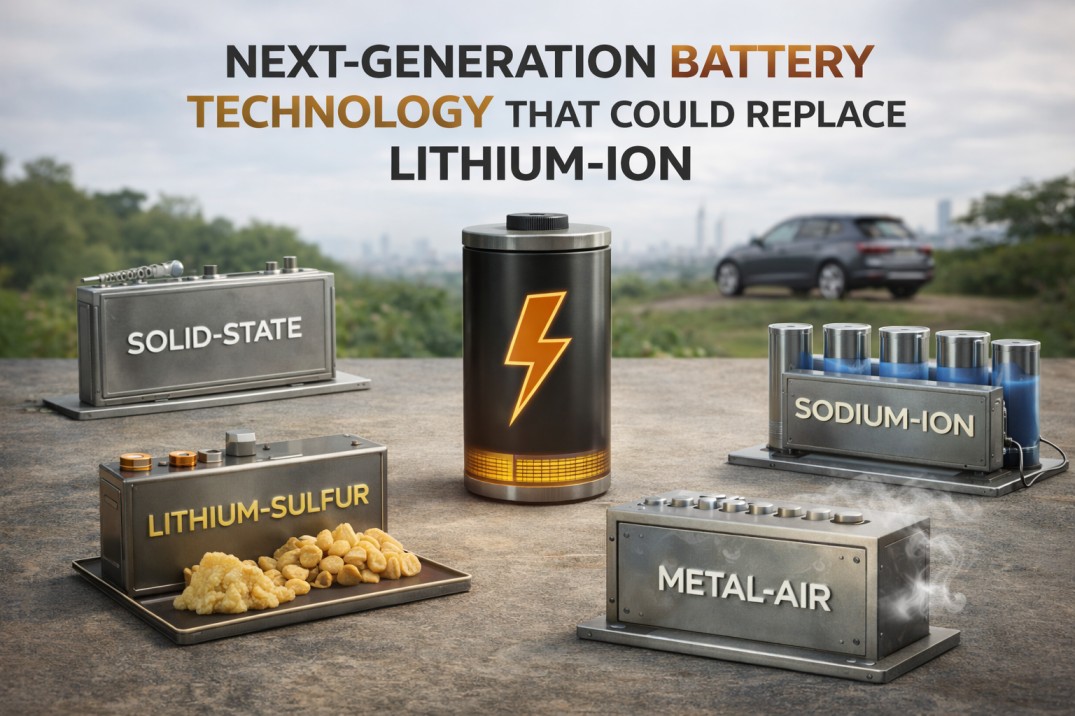
The level of excellence we have achieved in battery technology is because of batteries. Batteries have powered our modern world and let us keep going in the field of innovation. From smartphones to electric vehicles, everything runs on batteries. When we talk about batteries, the only name that we get is lithium-ion battery. This type of battery has served the global market for decades.
In this rapidly changing world where we witness a new invention every day, there is a time to replace lithium-ion batteries with EV battery innovation. Lithium-ion batteries offer high energy with a decent lifespan, but this is not enough for potential growth in the future. The world is changing faster than ever, and the rapid development of EV and renewable energy storage requirements and the ability of lithium-ion batteries are vague. This is the time for new EV battery innovation, and the world is moving ahead at the right pace.
Why is a lithium-ion battery technology important?
Lithium-ion batteries offer so many features that fulfill the global needs. Lithium-ion batteries have high energy density, and the cost of deployment is also low. The overall outcome and performance of lithium-ion batteries is also satisfactory. These features of lithium-ion batteries make them a perfect product for energy storage requirements.
Currently, lithium-ion batteries help in global EV adoption and also ensure strong grid storage. In this surging demand of storage products, lithium-ion batteries outperformed. Furthermore, these batteries become a crucial component for consumer electronics that makes it a need for every individual.
Why are lithium-ion batteries not the future?
Apart from the exceptional contributions in the globally surged demand, there are some flaws that obstruct the continuation of lithium-ion batteries in coming years.
- Lithium-ion batteries are made with lithium and other materials that are counted as a natural source, and these materials are geographically concentrated. This raises huge concerns about mining, supply chain disruptions, and a lot more.
- One of the properties of lithium-ion batteries is that these batteries overheat and may catch fire if they get damaged due to any reason. So, proper handling of these batteries is also a crucial task.
- It is true that lithium-ion batteries can hold a good amount of energy, but this is not going to be enough for future gadgets.
- Along with all of this, you cannot perform reliable fast charging in lithium-ion batteries. It degrades comparatively faster when it gets fast charged frequently.
These are some of the reasons that make lithium-ion batteries ineffective for future requirements, and that is why there is a need for EV battery innovation.
EV battery innovation: A next-gen tech
The requirement of most advanced batteries is mostly in EV cars. In cars that run on electricity, customers want a longer range, fast charging facilities, low cost, and safe working conditions. EV battery technology innovation is trying to fulfill these requirements by adding different products:
- Solid-state batteries: SSBs use solid electrolytes that empower the lithium-ion battery and boost its effectiveness. It delivers twice the energy density and also improves safety because it doesn’t have any flammable liquid. Also, this type of battery also attains an impressive fast charging potential along with the feature of a long lifespan. This EV battery innovation is far better than traditional lithium-ion batteries and ensures safety and productivity. Now, companies have started commercializing the SSBs, and in a very short time this type of battery may dominate the market.
- Lithium-sulfur battery: The traditional lithium-ion batteries have a lithium anode, but this lithium-sulfur battery attains a sulfur cathode. It delivers a super high energy density and is comparatively lower in cost. It has a great combination of productivity and sustainability along with safety that makes it a better replacement of lithium-ion batteries. But these batteries have an issue with a small life cycle. If this issue gets resolved, then it becomes a great option as an energy storage device.
- Sodium-ion batteries: In this EV battery innovation, we have replaced lithium with sodium, and that type of battery is called a sodium-ion battery. It doesn’t have a high cost, and it is comparatively more sustainable. Countries that have a chilled winter will get the maximum benefits from this battery.
- Metal air batteries: This is a revolutionary technology that has come about in recent years. Here, the battery uses the oxygen directly from the air to react with the lithium or other metals and generate electricity simultaneously. If this type of battery comes as an EV battery innovation and is used in cars, then the cars will have a very high energy density. But this has a high technical requirement, and there might be a stability issue while driving.
These are some of the major EV battery innovations that could surpass the lithium-ion batteries in upcoming years. The next-gen batteries have so much to offer and also fulfill the limitations of lithium-ion batteries, which makes them a good source of power that is globally accepted.
Final words
When we talk about EV battery innovation, we find that lithium-ion batteries are dominating in current scenarios, but it is also true that they’re not reliable for future generations. The new or NextGen batteries will take over the market in the coming decades. The energy density, safety measures, and cost-effectiveness in NextGen batteries are far better than lithium-ion batteries.
The next-generation batteries have a comparatively faster charging module with reliability and stability. Also, there is no need to rely on any geographically concentrated natural sources for a nation to fulfill their energy storage requirements. The next-generation batteries have a significant impact on the life cycle of batteries. Furthermore, these batteries have a lower environmental impact as compared to the lithium-ion batteries.
We can clearly say that EV battery innovation will change the face of the energy storage industry and shift the power from lithium-ion batteries to next-gen batteries. This is the detailed analysis from the StockXcel Team, and we believe that the NextGen batteries are the future of the energy storage industry.